

Why Greek Olive Oil Is Good for the Heart ?
Discover why Greek olive oil supports heart health through Mediterranean diet research, traditional Greek eating habits, and the natural polyphenols found in extra virgin olive

Discover why Greek olive oil supports heart health through Mediterranean diet research, traditional Greek eating habits, and the natural polyphenols found in extra virgin olive oil. For decades, researchers have explored the connection between Mediterranean nutrition and cardiovascular health, and Greek olive oil continues to play a central role in many of these studies.
Today, Greece remains one of the countries most closely associated with the traditional Mediterranean diet. In Crete, the Peloponnese, and across the Greek islands, families still use extra virgin olive oil every day in traditional recipes. Because of this strong culinary tradition, researchers continue to examine Greek olive oil as part of Mediterranean lifestyle research.
Olive oil has shaped Greek cuisine for thousands of years. In many regions of Greece, families use it daily in vegetables, legumes, fish dishes, and traditional Mediterranean recipes. This constant presence in Greek food culture continues to attract researchers studying cardiovascular health.
Moreover, Greek cooking relies heavily on extra virgin olive oil instead of industrial fats or heavily processed oils. As a result, Mediterranean diet studies often focus on traditional Greek eating habits and long-term dietary patterns.
Early Mediterranean diet studies showed that some Greek populations, especially in Crete, historically experienced lower rates of cardiovascular disease despite consuming relatively high amounts of fat.
However, researchers quickly discovered that Greek communities consumed most of these fats through extra virgin olive oil rather than industrial or heavily processed products. Scientists also observed that traditional Greek diets relied heavily on vegetables, legumes, herbs, fish, and seasonal ingredients.
Because of these eating habits, researchers continue to use Greece as one of the leading references in Mediterranean nutrition studies.
Traditional Greek cuisine places olive oil at the center of daily meals. Greek families use it for cooking vegetables, roasting fish, preparing legumes, and seasoning salads.
In addition, many rural regions of Greece continue to maintain very high olive oil consumption compared to other Mediterranean countries. This strong culinary tradition explains why researchers continue to connect Greek olive oil with Mediterranean lifestyle studies.
Today, olive oil represents both a cultural symbol and one of the most important ingredients in Greek food culture.
Even today, research published by Harvard Medical School and the New England Journal of Medicine continues to describe the Mediterranean diet as one of the most studied dietary models for cardiovascular health.
Researchers continue to explore how Mediterranean eating patterns may influence cardiovascular function, lipid balance, and overall long-term health. At the same time, scientists emphasize that the Mediterranean diet is not based on a single ingredient alone. Physical activity, shared meals, fresh foods, and traditional eating habits also contribute to this lifestyle model.
Consequently, Greek olive oil remains closely associated with some of the most influential nutritional studies conducted over the past several decades.
Source: New England Journal of Medicine — “Primary Prevention of Cardiovascular Disease with a Mediterranean Diet”
Source: Harvard T.H. Chan School of Public Health — Mediterranean Diet
Crete remains one of the most studied regions in Mediterranean diet and cardiovascular nutrition research. For decades, scientists have explored the eating habits and traditional lifestyle of Cretan populations to better understand the relationship between Mediterranean food culture and long-term heart health.
Moreover, early Mediterranean diet studies brought international attention to Crete during the mid-20th century. Researchers observed that several rural communities on the island historically experienced lower rates of cardiovascular disease compared to many Western countries, even though local populations consumed relatively high amounts of fat.
However, scientists quickly discovered that Cretan communities consumed most of these fats through extra virgin olive oil rather than processed fats or heavily industrialized foods. Traditional meals also relied heavily on vegetables, legumes, herbs, fish, and seasonal ingredients.
Because of these observations, researchers gradually established Crete as one of the leading references in Mediterranean nutrition and healthy lifestyle research.
In the 1950s, researchers studying rural villages in Crete observed high life expectancy and comparatively low levels of cardiovascular disease. These findings quickly attracted international attention because they differed significantly from observations made in several industrialized countries at the time.
Furthermore, many traditional Cretan communities maintained eating habits based on locally grown ingredients and seasonal foods. Meals were often prepared at home, using olive oil daily and limiting the consumption of heavily processed products.
Today, these early observations are still regularly cited in Mediterranean diet research.
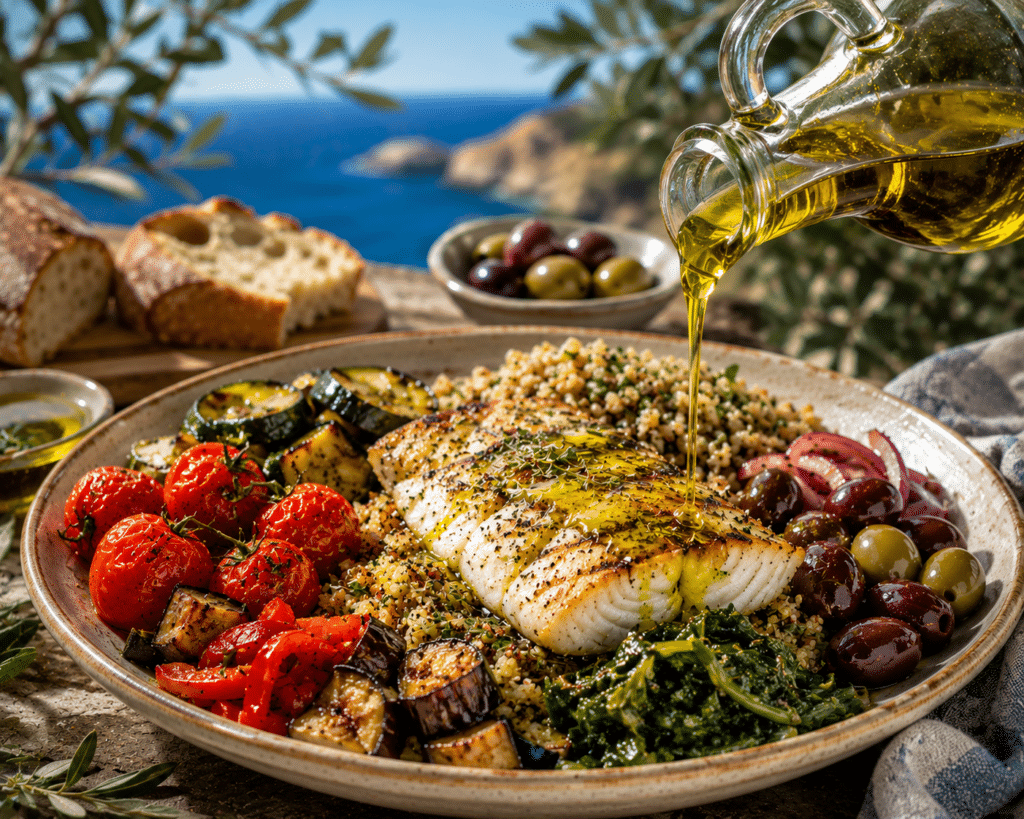
Traditional Cretan meals were mainly composed of vegetables, legumes, minimally processed grains, fish, wild herbs, and daily consumption of extra virgin olive oil. In addition, fresh fruits and locally produced foods played a central role in everyday meals.
Unlike many modern Western diets, traditional Cretan nutrition relied heavily on plant-based ingredients rather than industrial products. Olive oil was used not only for salads but also for cooking vegetables, legumes, and slow-cooked dishes.
Consequently, researchers often describe the traditional Cretan diet as one of the clearest examples of Mediterranean food culture.
Researchers also emphasize that the observed health benefits are not linked to olive oil alone. Physical activity, social connections, shared family meals, and a generally slower pace of life also played an important role in traditional Greek communities.
In addition, lower consumption of ultra-processed foods and a strong connection to local agriculture contributed to this Mediterranean lifestyle model.
As a result, modern Mediterranean diet studies usually focus on the overall lifestyle rather than on a single ingredient or food category.
Source: Harvard Medical School — Mediterranean Lifestyle Studies
Source: World Health Organization — Healthy Mediterranean Diet
Greek extra virgin olive oil naturally contains compounds that are widely studied for their potential effects on cardiovascular health. Researchers are particularly interested in its fatty acid composition, antioxidant content, and naturally occurring plant compounds.
Moreover, several Greek olive oil varieties are recognized for their naturally high concentration of beneficial compounds, especially oils produced in Crete and southern Greece.
Today, Greek extra virgin olive oil remains one of the most researched foods associated with the Mediterranean diet.
The main fatty acid found in olive oil is oleic acid, a monounsaturated fat widely studied in nutritional science. According to the American Heart Association, replacing certain saturated fats with monounsaturated fats may help support a healthier lipid balance when included as part of an overall balanced diet.
In addition, monounsaturated fats are considered one of the defining nutritional characteristics of the Mediterranean diet.
Unlike many industrial fats, olive oil contains a naturally high proportion of these fats, which explains why it continues to attract attention in cardiovascular nutrition studies.
Some premium Greek olive oils, particularly those produced from the Koroneiki olive variety, naturally contain high levels of polyphenols. Researchers study these plant compounds for their antioxidant properties and their potential role in protecting cells against oxidative stress.
In addition, several factors can influence polyphenol concentration, including climate conditions, olive variety, harvest timing, storage quality, and extraction techniques. Early harvest extra virgin olive oils often contain higher levels of these naturally occurring compounds.
Today, researchers and Mediterranean producers increasingly value high-polyphenol olive oils for both scientific interest and premium olive oil production.
Greek olive oil also naturally contains vitamin E, an antioxidant that contributes to protecting cells against oxidative stress. Together with polyphenols, vitamin E explains part of the growing scientific interest surrounding extra virgin olive oil and Mediterranean nutrition research.
Moreover, producers use cold mechanical extraction to preserve more naturally occurring compounds compared to refined olive oils. This process helps maintain antioxidants, aromas, and the original characteristics of the olives.
Because of these production methods and nutritional properties, many researchers and Mediterranean producers consider extra virgin olive oil the highest-quality category of olive oil.
Source: American Heart Association — Dietary Fats and Cardiovascular Health
Source: European Food Safety Authority (EFSA) — Olive Oil Polyphenols Health Claim
Not all olive oils contain the same amount of polyphenols. In fact, concentration levels depend on multiple factors such as olive variety, terroir, harvest timing, storage conditions, and extraction techniques.
Cold mechanical extraction, commonly used for extra virgin olive oil, helps preserve more natural compounds compared to refined oils.
Consequently, production quality plays a major role in the nutritional profile of olive oil.
Source: European Food Safety Authority (EFSA) — Olive Oil Polyphenols Health Claim
Oxidative stress refers to a biological imbalance involving free radicals and the body’s ability to neutralize them. Researchers study oxidative stress in connection with cellular aging and cardiovascular function.
Because of this, scientists are increasingly interested in foods naturally rich in antioxidants, including extra virgin olive oils containing naturally occurring polyphenols.
Furthermore, oxidative stress remains one of the most studied biological mechanisms linked to aging and long-term health.
In 2011, the European Food Safety Authority officially recognized that olive oil polyphenols contribute to the protection of blood lipids from oxidative stress under specific consumption conditions.
This recognition significantly increased international interest in high-polyphenol olive oils, including several premium Greek varieties.
As a result, many Greek producers now focus more strongly on preserving polyphenol content during harvesting and extraction.
Not all olive oils contain the same amount of polyphenols. In fact, concentration levels depend on multiple factors such as olive variety, terroir, harvest timing, storage conditions, and extraction techniques.
Cold mechanical extraction, commonly used for extra virgin olive oil, helps preserve more natural compounds compared to refined oils.
Consequently, production quality plays a major role in the nutritional profile of olive oil.
Source: European Food Safety Authority (EFSA) — Olive Oil Polyphenols Health Claim
The reputation of Greek olive oil comes from a combination of local olive varieties, traditional production methods, and Mediterranean growing conditions. In addition, Greece produces one of the world’s highest proportions of extra virgin olive oil.
Many Greek producers also continue to operate through small family farms that preserve traditional harvesting and extraction practices passed down through generations. These methods remain deeply connected to local agriculture and regional food culture.
Moreover, the Mediterranean climate, strong sunlight, and dry summers create favorable conditions for olive cultivation across many Greek regions. Together, these elements contribute to the international reputation of Greek olive oil and its strong association with Mediterranean quality standards.
Widely grown in Crete and southern Greece, the Koroneiki olive produces oils known for their strong aroma and naturally high polyphenol content. This variety is considered one of the most important olive cultivars in Greece.
Moreover, Koroneiki oils are often recognized for their fresh, slightly peppery flavor profile and their intense aromatic character.
Today, this variety plays a central role in many premium Greek olive oil productions.
Strong sunlight, dry summers, Mediterranean soils, and sea air directly influence the quality of olives grown in Greece. These natural conditions contribute to the aromatic profile and composition of Greek olive oil.
At the same time, Greece’s climate supports traditional olive cultivation methods that remain closely linked to local agriculture.
As a result, environmental conditions significantly influence the final quality of extra virgin olive oil.
Greece produces a particularly high percentage of extra virgin olive oil obtained through cold mechanical extraction. Producers use this method to preserve more antioxidants, aromas, and naturally occurring compounds naturally present in olives.
In contrast to refined oils, extra virgin olive oil undergoes minimal processing. As a result, it maintains more of its original nutritional and aromatic characteristics.
Because of these production standards, researchers and Mediterranean producers often associate Greek olive oils with high-quality extra virgin olive oil production.
Source: International Olive Council — Olive Oil Production and Composition
Source: University of Athens — Studies on Greek Olive Oil Polyphenols
In traditional Greek cuisine, olive oil is often used as a main ingredient rather than simply as a dressing. It plays a central role in daily meals throughout the country.
Additionally, olive oil remains deeply connected to the social and cultural traditions of Mediterranean life.
Even today, many Greek families continue to use olive oil in recipes passed down through generations.
Greeks traditionally use olive oil with salads, cooked vegetables, legumes, grilled fish, and slow-cooked dishes. In Crete, some traditional recipes use large quantities of olive oil as part of the cooking process itself.
As a result, olive oil consumption in Greece remains among the highest in the world.
Moreover, olive oil is commonly used both raw and cooked in Mediterranean cuisine.
Traditional Greek food mainly relies on fresh vegetables, herbs, legumes, fish, seasonal ingredients, and minimally processed recipes. Meals are often prepared at home using local products from nearby farms or markets.
This simplicity remains one of the defining characteristics of the Mediterranean diet.
Furthermore, many traditional recipes continue to follow seasonal cooking patterns linked to local agriculture.
Researchers regularly point out that the benefits observed in Mediterranean studies are also linked to the overall traditional Greek lifestyle, including physical activity, shared meals, and lower consumption of industrial foods.
Today, this lifestyle continues to inspire nutritional research worldwide and remains one of the most recognized models associated with Mediterranean living.
Source: UNESCO — Mediterranean Diet Intangible Cultural Heritage
Source: Harvard School of Public Health — Mediterranean Diet Research
Discover why Greek olive oil supports heart health through Mediterranean diet research, traditional Greek eating habits, and the natural polyphenols found in extra virgin olive
Olive oil polyphenols have become a key reference when evaluating olive oil quality.
However, numbers alone often create confusion.